


Peer Reviewed Study
Performance Backed by Peer-Reviewed Science
A study published in the American Journal of Infection Control (AJIC) shows a proven reduction in MRSA, fungi, and aerobic bacteria air and surface bio-burdens and a greater than 70% reduction in HAIs.
Sustained Reduction in HAIs of 70%+ (CAUTI, CLABSI, C. diff, MRSA)
A decline in total aggregate counts of HAIs (ie, CAUTI, CLABSI, C difficile, MRSA bacteremia, and pneumonia) at both ICUs was observed when compared to a historical count 21 months prior to AP activation for the Louisiana site (71% reduction; 24 HAIs to 7 HAIs) (Fig A) and 12 months prior at the Kentucky site (70% reduction; 10 HAIs to 3 HAIs) (Fig B)
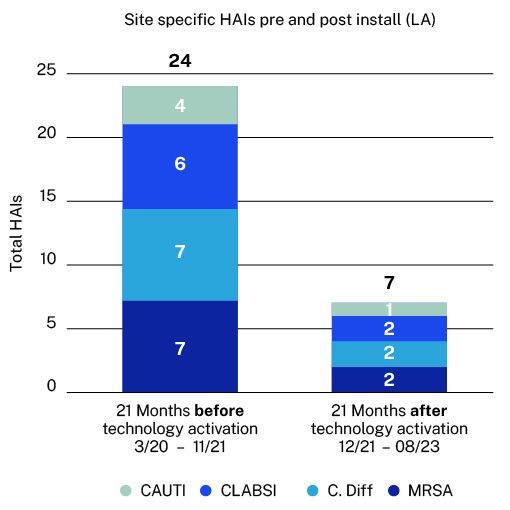
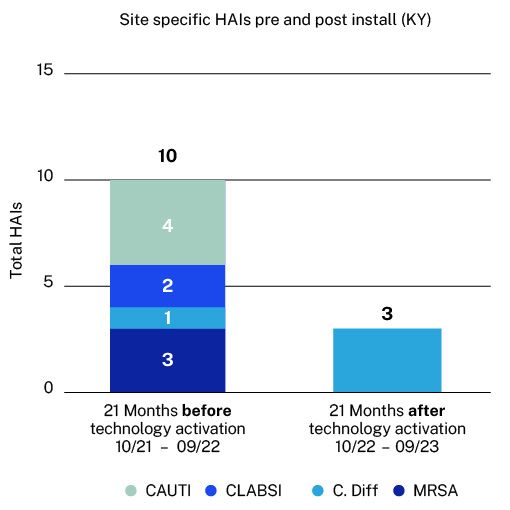
Fig. Aggregate counts of surveilled HAIs comparing matched time periods before and after ActivePure® technology activation for Louisiana (A) and Kentucky (B). CAUTI, catheter-associated urinary tract infection; C difficile, Clostridioides difficile; CLABSI, central line-associated bloodstream infection; MRSA, methicillin-resistant Staphylococcus aureus.
Statistically Significant Reductions in Microbial Reservoirs Across the Environment of Care
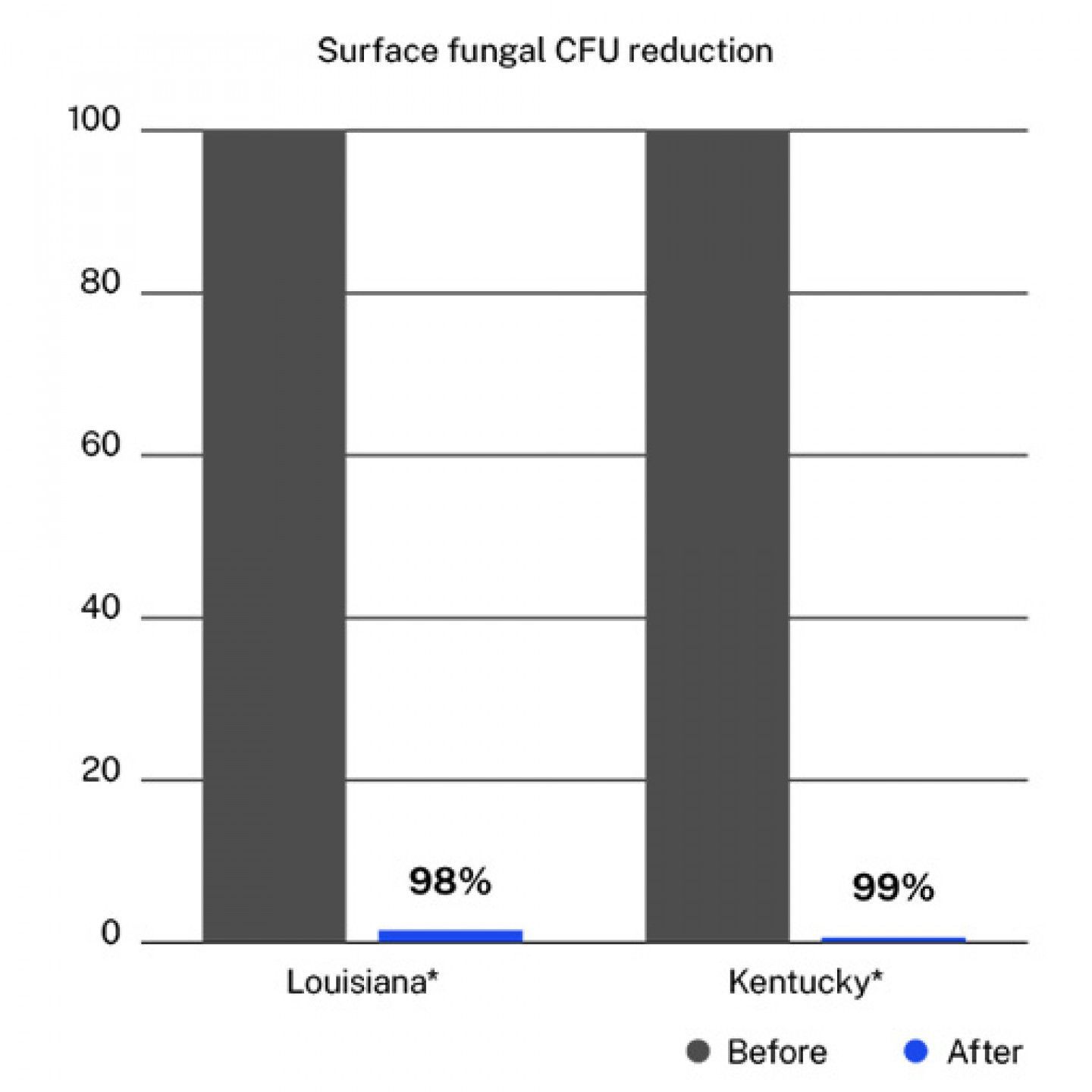
Environmental Surface Fungal CFU Reduction
Mean fungal CFUs were reduced by 98% at Louisiana site and 99% at the Kentucky site from baseline to postactivation
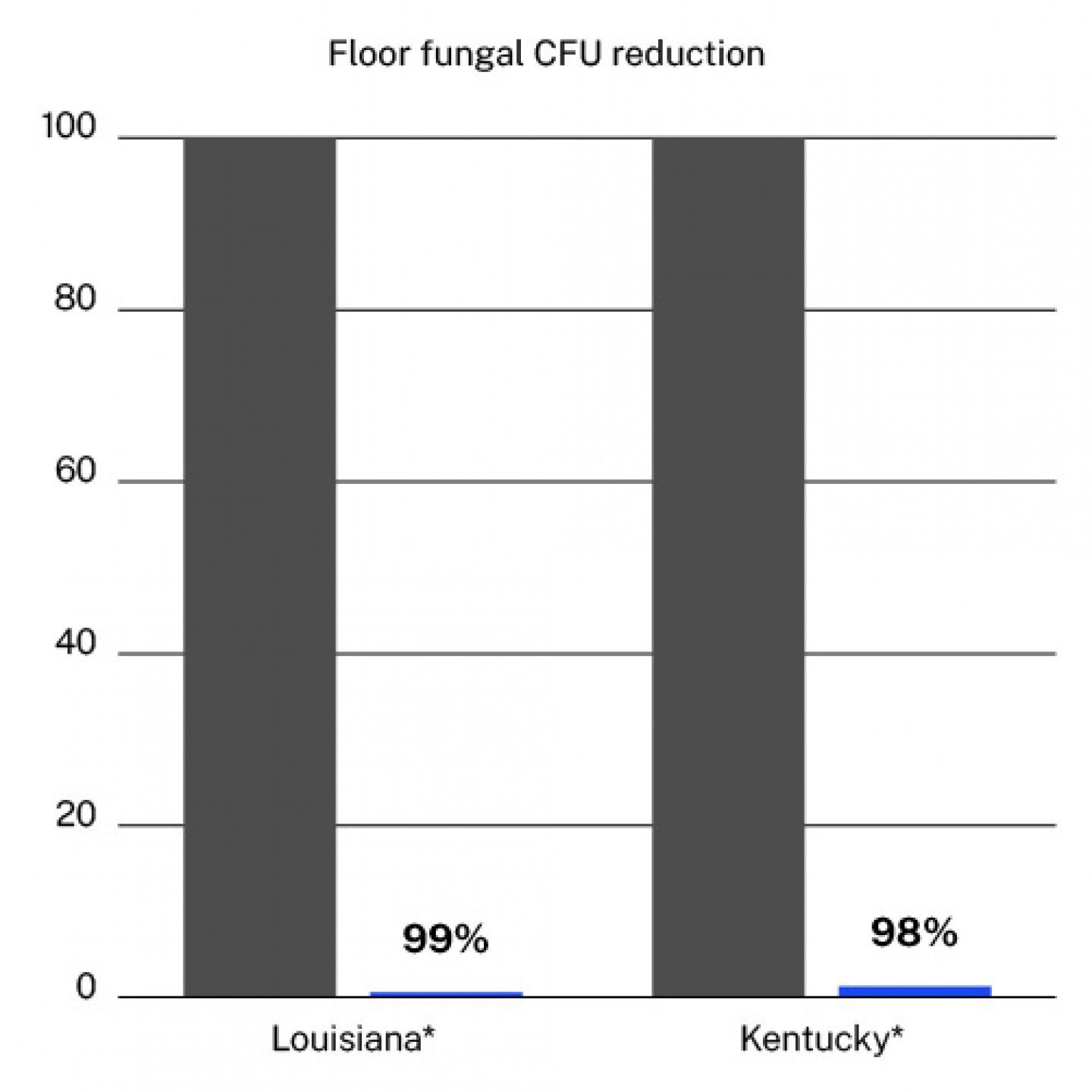
Environmental Floor Fungal CFU Reduction
Mean fungal CFUs were reduced by 99% at Louisiana site and 98% at the Kentucky site from baseline to postactivation
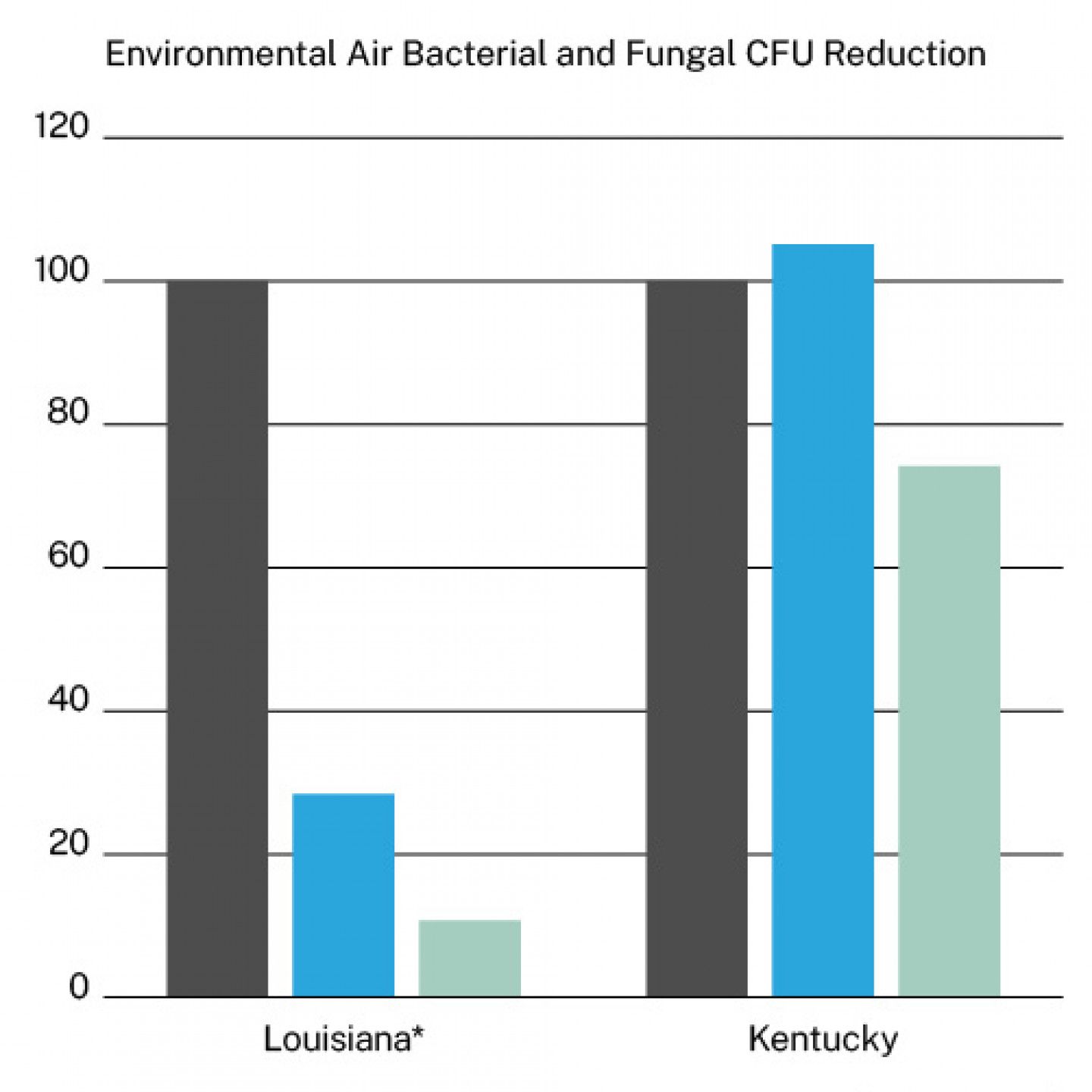
Environmental Air Bacterial and Fungal CFU Reduction
Mean aerobic bacterial and fungal CFUs were reduced by 72% (27.3 CFUs to 7.7 CFUs) and 89% (10.6 CFUs to 1.18 CFUs), respectively, from baseline to postactivation at Louisiana site. Mean aerobic bacterial CFUs increased by 6% (9.29 CFUs to 9.86 CFUs)1 and mean fungal CFUs were reduced by 27% (1.57 CFUs to 1.14 CFUs) at the Kentucky site.
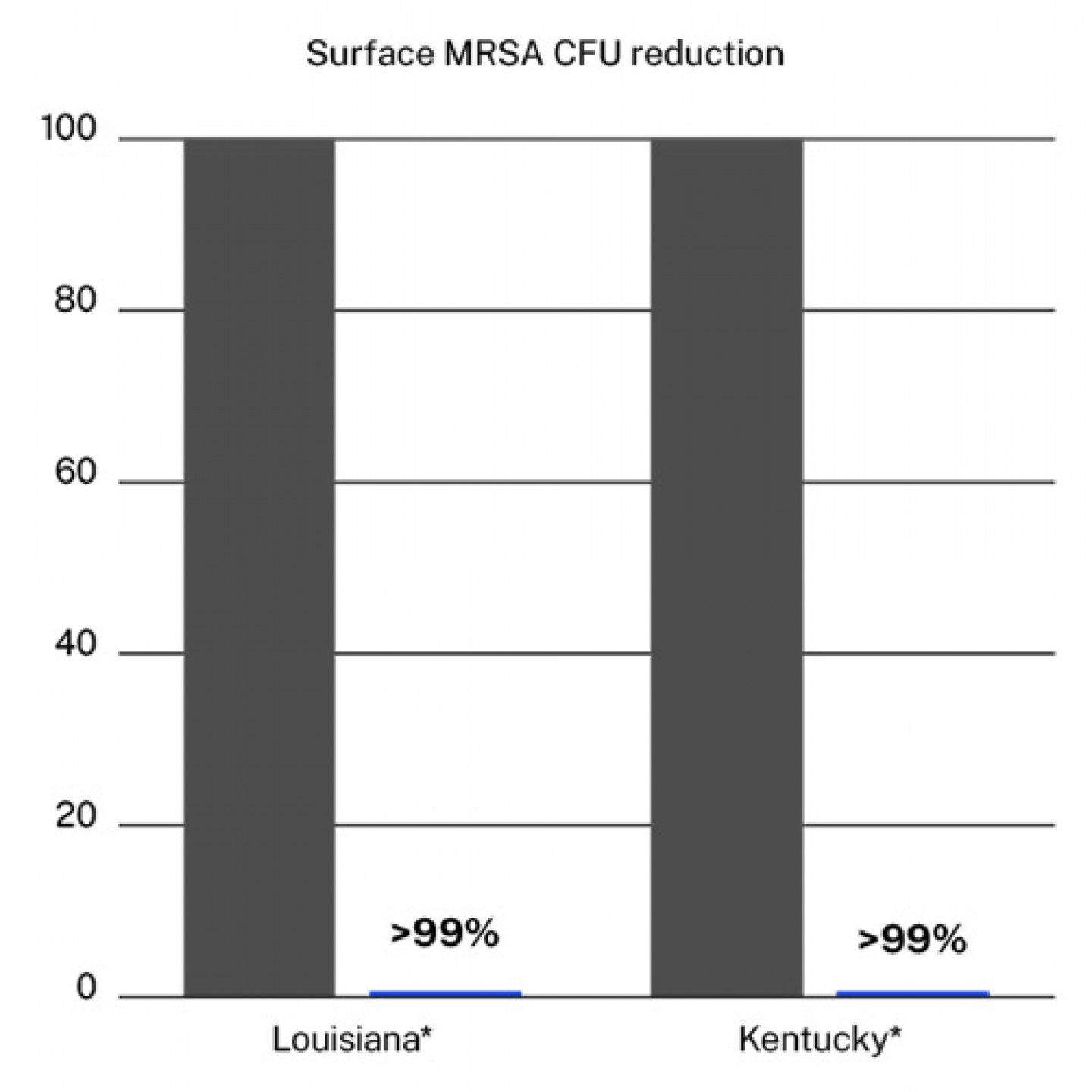
Surface MRSA CFU Reduction
Mean MRSA CFUs were depleted by over 99% at both locations. The Louisiana facility saw a drop from 426.98 CFUs to 3.00. The Kentucky facility saw a drop from 173.61 CFUs to 0.64 CFUs.
* Illustrated findings were statistically significant.
1 Mean aerobic bacterial air CFUs at the Kentucky site were the only study result to show an increase compared to baseline, which is likely due to the turbulent nature of airflow and ensuing variability of airborne microbe dispersal.
